
2026-10-06 · Michael 'Mike' Chen
How to Clear Kitchen Drain Clogs in Brooklyn Brownstones
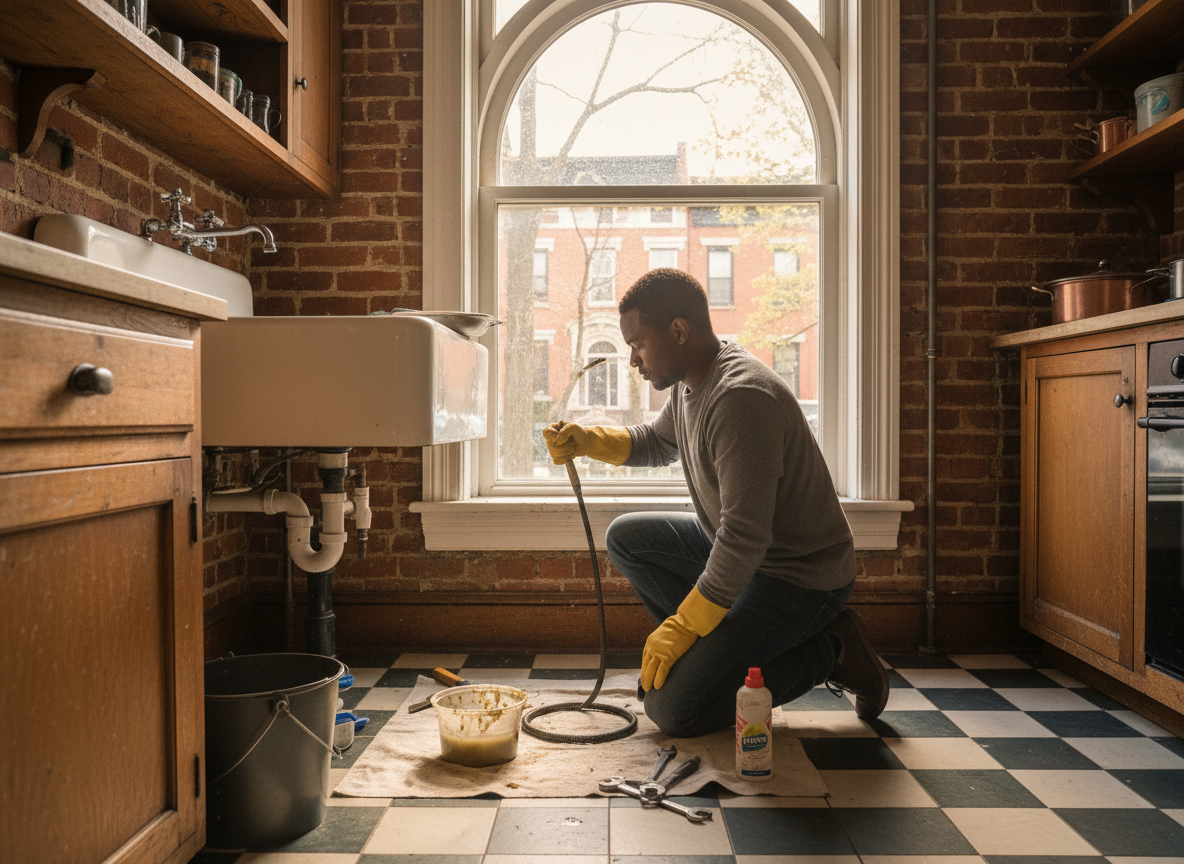
Clearing kitchen drain clogs in Brooklyn brownstones often involves a combination of careful DIY methods and, for stubborn issues, professional intervention. The plumbing in these classic homes, many built over 100 years ago, presents unique challenges compared to modern construction. While a simple plunger or baking soda and vinegar can often resolve minor blockages, more persistent clogs, especially those deep within the system or involving grease buildup common in older pipes, will require specialized tools like a drain snake or even <a href="/services/hydro-jetting">hydro jetting</a> from a professional drain cleaning service. The age and material of the pipes, often cast iron, mean that aggressive chemical cleaners should be avoided to prevent further damage.
Understanding Your Brownstone's Kitchen Plumbing
The plumbing systems in brownstones throughout Brooklyn 11236, including neighborhoods like East Flatbush and Flatlands, are distinctly different from those in newer buildings. Many of these homes still feature original or very old cast iron drain lines, which are prone to internal corrosion and rough surfaces that easily trap grease, food particles, and soap scum. Unlike the smooth PVC pipes found in contemporary homes, cast iron's texture creates more friction, leading to a faster accumulation of debris. This historical context means that what might be a minor clog in a modern home can quickly become a significant blockage in a brownstone, requiring more frequent attention and often more robust clearing methods. Recognizing these characteristics is the first step in effective clog management.
Common Causes of Kitchen Drain Clogs in Older Homes
Kitchen drains in Brooklyn brownstones face a specific set of challenges that contribute to frequent clogs. The primary culprit is often a combination of grease and food particles. Over decades, cooking oils, fats, and small food scraps like coffee grounds or rice accumulate on the rough interior surfaces of old cast iron pipes. This sticky residue acts as a magnet for other debris, gradually constricting the pipe's diameter until water can no longer flow freely. Another significant factor is soap scum, which, when combined with hard water minerals prevalent in New York City, forms a tenacious film that exacerbates blockages. Lastly, the age of the plumbing itself plays a role; cracks, misaligned pipe sections, or even tree root intrusion from mature street trees near landmarks can create catch points for debris, leading to recurring issues. For persistent or <a href="/services/recurring-drain-clogs">recurring drain clogs</a>, a professional assessment is often the most efficient solution.
DIY Solutions for Minor Kitchen Clogs
For minor kitchen drain clogs in your Brooklyn brownstone, several DIY methods can be effective before calling in a professional. Begin with a plunger; ensure there's enough water in the sink to cover the plunger cup, create a tight seal, and plunge vigorously for 15–20 seconds. If that doesn't work, a combination of baking soda and vinegar can often break down grease and grime. Pour 1 cup of baking soda down the drain, followed by 1 cup of white vinegar. Let it sit for 30 minutes to an hour, then flush with hot water. For slightly more stubborn clogs, a drain snake (also known as a hand auger) can be purchased at most hardware stores. Carefully feed the snake into the drain until you feel resistance, then crank the handle to break up or retrieve the blockage. Remember to always avoid harsh chemical drain cleaners, as they can damage older pipes and pose health risks.
When to Call a Professional Drain Cleaning Service
While DIY methods can resolve many minor clogs, there are clear signs that indicate it's time to call a professional drain cleaning service like Brooklyn Drain Harbor, based right here at 647 E 87th St. If water is still draining slowly after multiple attempts with a plunger or baking soda and vinegar, or if the clog is completely blocking the drain, professional help is warranted. Another red flag is when you notice foul odors emanating from the drain, which often signals significant organic buildup or even sewer gas issues. Furthermore, if you experience <a href="/services/multiple-drains-clogged">multiple drains clogged</a> simultaneously, especially if a toilet or shower is also backing up, it suggests a deeper problem in your main sewer line that requires immediate attention. Professionals have specialized tools like <a href="/services/drain-camera-inspection">drain camera inspection</a> equipment to accurately diagnose the issue without guesswork.
Preventative Measures for Brownstone Kitchen Drains
Proactive maintenance is crucial for preventing kitchen drain clogs in Brooklyn's older homes. Implementing a few simple habits can significantly reduce the frequency and severity of blockages. Firstly, always scrape food scraps into the trash before washing dishes; even small particles can accumulate over time. Secondly, never pour grease, oil, or fat down the drain. Instead, collect it in a disposable container and discard it in the garbage once it cools and solidifies. Installing drain strainers in your sink can also catch larger food particles before they enter the plumbing system. Regularly flushing your drains with hot water, especially after heavy use, can help keep them clear. For brownstones, consider a professional drain cleaning every 1–2 years, particularly if your home has older cast iron pipes, to preemptively clear buildup and ensure smooth operation, saving you from costly emergency repairs down the line.